
Smart Homes
Designed to Perform. Monitored to Improve.
At Nurture-AD, we combine architectural design, Passive House principles, performance monitoring and intelligent energy management to create comfortable, efficient homes.
Pedrogos 6 | Certified Passive House Plus, Mafra, Portugal.
From Prediction to Reality
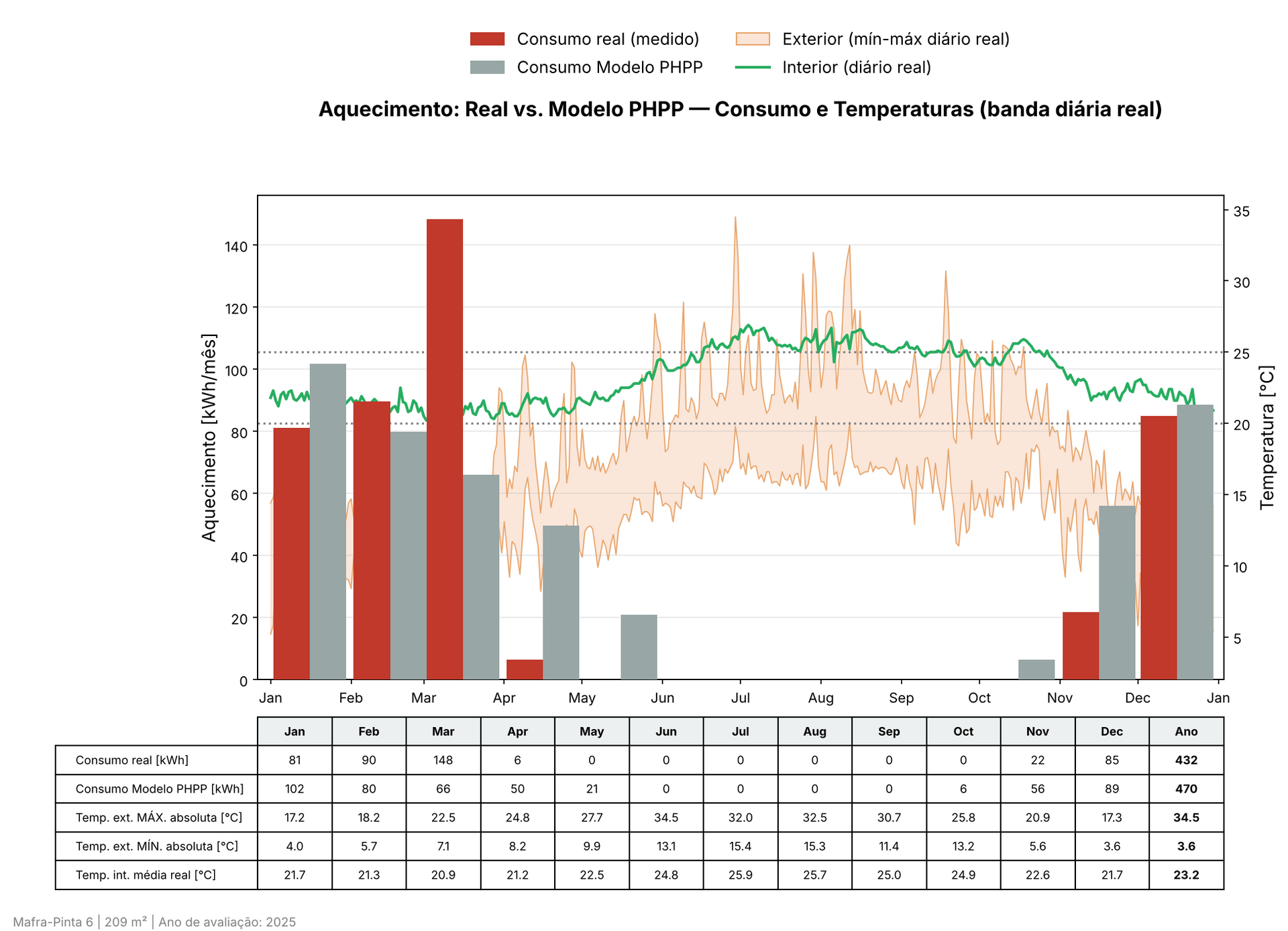
At Pedrogos 6, a certified Passive House Plus in Mafra, the estimated annual space-heating demand derived from 2025 monitoring was 6.4 kWh/(m²·year), compared with 6.93 kWh/(m²·year) predicted by PHPP — a difference of just 7.6%.
Monitoring also helps identify how climate and occupant behaviour influence actual building performance.
Intelligent Energy Management
Understanding energy use. Making better decisions.
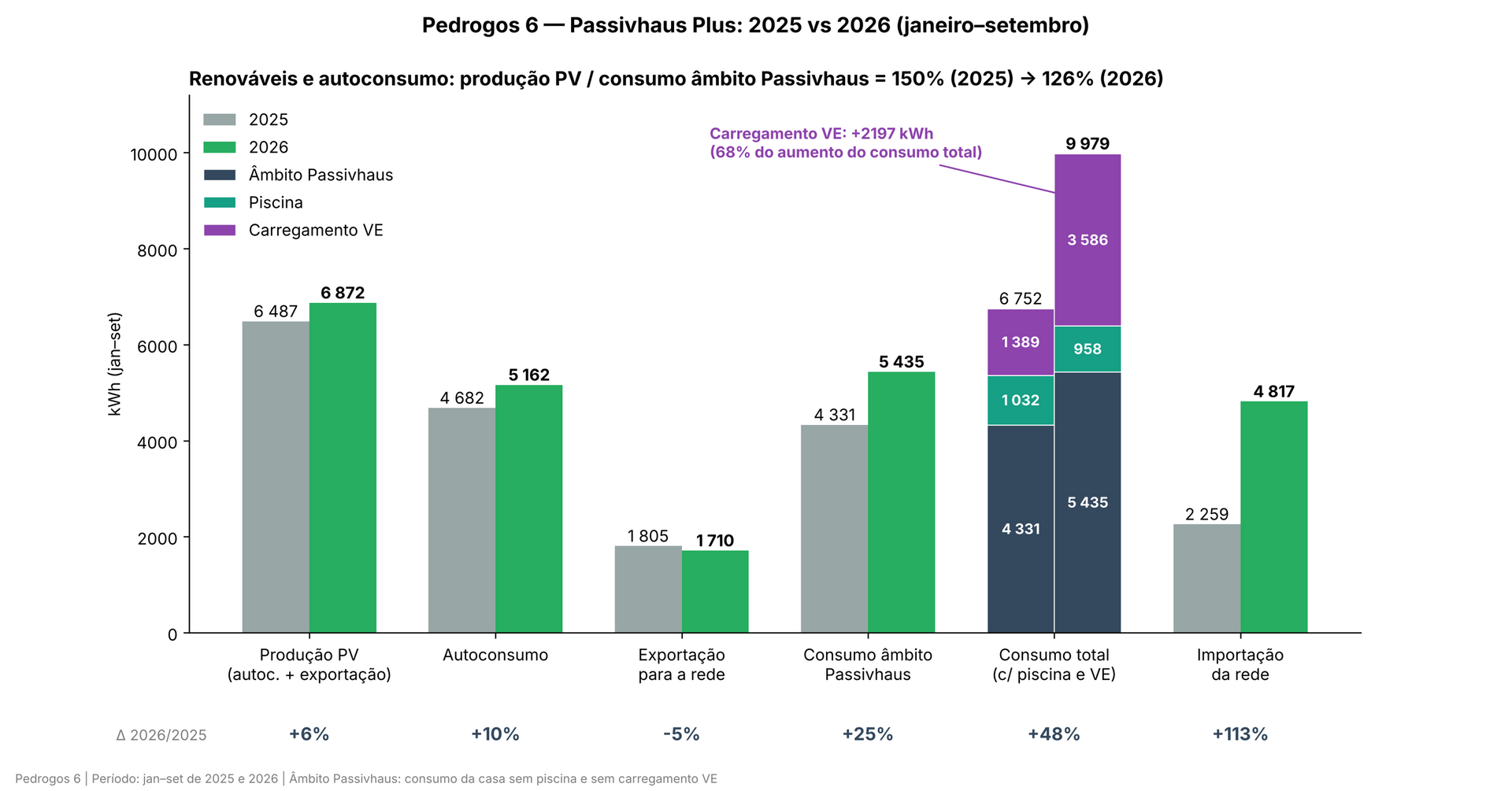
Monitoring reveals the relationship between solar energy production, household consumption and electricity imported from the grid.
At Pedrogos 6, photovoltaic production increased by 6% between January–September 2025 and 2026, while total electricity consumption rose by 48%. Electric vehicle charging accounted for 68% of this increase.
These insights help identify opportunities to optimise energy use, increase solar self-consumption and reduce reliance on the electricity grid.
Self-Consumption & Self-Sufficiency
Two indicators. Different stories.
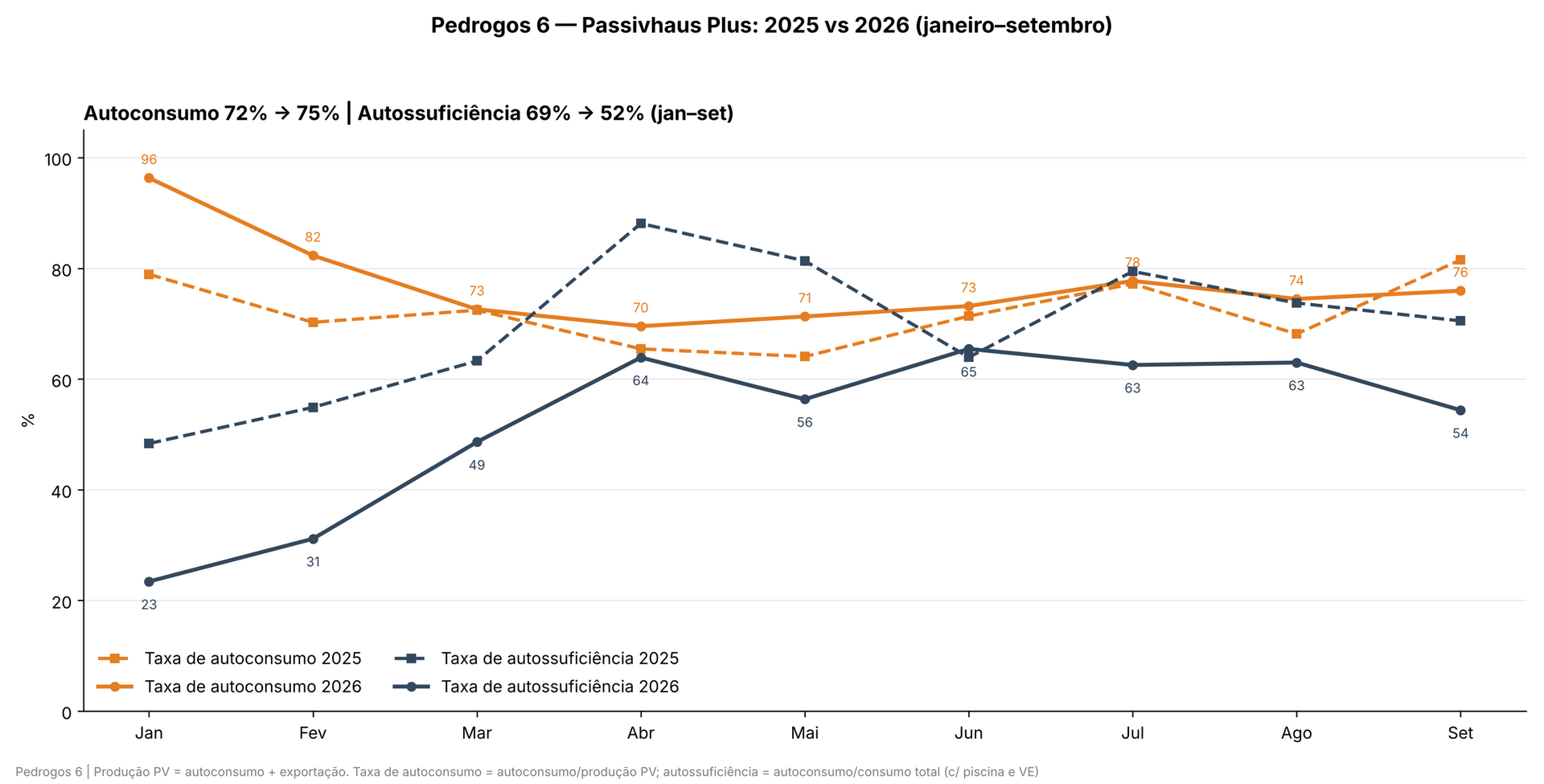
At Pedrogos 6, solar self-consumption increased from 72% to 75% between January–September 2025 and 2026. Over the same period, electrical self-sufficiency fell from 69% to 52%, largely due to increased electric vehicle charging.
Using more of the solar energy produced does not necessarily mean relying less on the grid. Monitoring makes this distinction visible and helps identify opportunities for smarter energy management.
SOLAR SELF-CONSUMPTION
72% → 75%
2025 → 2026
ELECTRICAL SELF-SUFFICIENCY
69% →
52%
2025 → 2026
Comparison of January–September periods in each year.